
December 2025 IL MENSILE: the month that was
I can’t help but compare it to the AI drivel we’re being fed as news, as review, as cultural signpost
I’m reading Graydon Carter’s memoire, When the Going Was Good: An Editor’s Adventures During the Last Golden Age of Magazines. Geez, what a time to be a journalist. Income. Expense accounts. Restaurants. Time to research (in luxury hotels). While Bryan Burrough, one of Carter’s Vanity Fair contributors - earning a cool $500,000 a year for three 20,000 word stories – describes the magazine as “a guilty pleasure for the intelligentsia” I can’t help but compare it to the AI drivel we’re being fed as news, as review, as cultural signpost. There’s quite a bit on that below – influencers, fake reviews, fake restaurants, the list (and lists) go on.
Welcome to 2026.
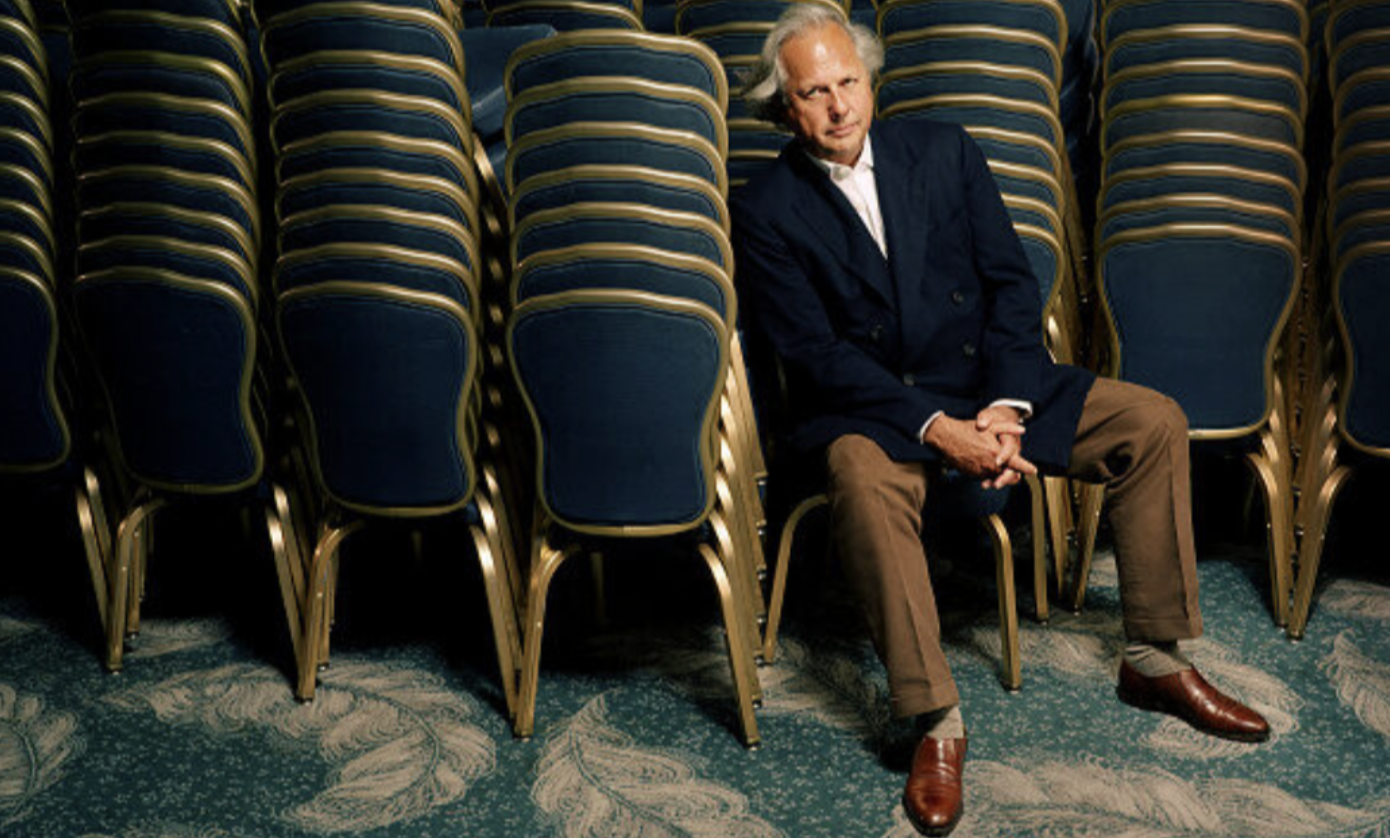
Graydon Carter’s Vanity Fair reigned over magazines—until the golden age of print ended. Harry Borden / Getty Images
Producers
- I was intrigued by this article on the dual harvest trials being conducted in Germany, looking at the potential symbiotic relationship in producing both grapes and electricity. Solar panels, positioned on high poles above the vines, produce energy while providing dappled shade, and also protecting from strong hail and harsh frosts.
My heart bleeds for the lack of romance in such fields, but the logic may be compelling? The article came via The Morning Claret, and Simon J Woolf’s (got to love a middle initial) thoughts on the trials can be found both here and here:
‘Instead of working with nature, its goal appears to be to subdue and moderate it … For the moment, there are less invasive solutions for artisanal growers to … respond to climate challenges: ground cover (planting grass or other crops between vineyard rows), planting trees in the vineyard and reviewing pruning and canopy management are examples. These techniques won’t prevent the more extreme ravages of nature - but neither do they mute the expression of time and place that is so key to our ongoing love story with wine.’
Woolf segues into a little banter about the use of resistant grape varieties as another solution to counter climate change in the vineyard. ‘Sometimes known as PIWIs, these crossings of Vitis vinifera [the Chardonnays and Pinots et al] with resistant genes from American or Asian species such as Vitis labrusca or Vitis riparia have been developed to withstand cold, damp and even drought conditions. One could argue that the creation of such varieties - done in a lab, by making 10,000 or more crossings and then isolating a single successful progeny - is a heavily interventionist process that wouldn’t find much truck in the natural wine community. But for growers who spurn systemic treatments against mildew and rot, PIWIs are an inviting solution to the constant need to spray copper and sulphur. Might they offer a more sustainable future? The natural wine community has embraced PIWIs arguably to a greater degree than the mainstream wine world.’
- Which allows me a second segue, onto this article, that must have gone through to the keeper last year (cricket analogies are up there with middle initials). In March, Alice Feiring gave a huge amount of love to this topic in her story on the history and resurgence of said hybrid grapes in France. The Salon des Vins Hybrides was the (unsurprising) catalyst for her article, the salon filled with familiar faces, Overnoy among them, joining together in celebration of these grapes.
‘By 1951,’ explains Feiring, ‘they comprised about 30% - 40% of all French vineyards. That's when the government gave a six-year mandate to uproot them. It was all-out war. Six varieties were completely banned from wine production altogether. It was said they were terrible for humans, causing blindness, madness, and … still, they thrived despite the smear campaigns.’
Her conclusion: ‘Whether political statement, or the fruit that can ensure we keep wine in our glass, I’ve not seen this kind of excitement since the birth of the natural wine revolution.’ Them’s are big fighting words! A space worth watching …
- Incidentally, in the same article Feiring talks about her visit to Katie Worobeck’s Jurassic vineyard and the small parcel of forgotten hybrids Katie found on her property that she believes were planted in the 1920s. ‘"Les Oubliées”’ says Feiring, ‘a velvety, snappy wine that is more Jura than hybrid. Catch it if you can. While [Katie] lucked into a hybrid adventure, visiting with her made us realize that in one of the sexiest regions on the planet, old hybrid plots are part of the history.’ It tickled my eternal fascination with the idea of the status quo and who gets to disrupt it.
- As with the end of every year, we were drowning in lists. I’m including here a couple of our favourites.
First up, Alice Feiring’s favourite bottles of 2025:
Mataburro – “Quartet” 2023, Laurent Roger & Melissa Ingrand
Kambyum – “Chaosmos” 2023, Vincent Christophe
Les Maoú – “Vaste Programme” 2023, Vincent Garetta
Pataratte – Jura Chardonnay 2022, Mathieu Allante & Christian Boulanger
Chanterêves – Nuits-Saint-Georges 1er Cru “Les Damodes”, Tomoko Kuriyama & Guillaume Botrel
Prieuré Saint Christophe – Savoie 1986, Michel Grisard
(And, in turn, a list Alice suggests).
And Aaron’s (Not Drinking Poison) list of ten natural wine fascinators of 2025:
Domaine du Pech – Vin de France “Le Pech Abusé” 2021, Ludovic Bonnelle & Magali Tissot
Double Zéro – Vin de France “Les Ecrivains” 2018, Jean-François Cuzin & François Bouillot
Christian & Thibault Ducroux – Vin de France “Patience” 2023, Christian Ducroux & Thibault Ducroux
Pierre Groger – Vin de France “Compliqué” 2024, Pierre Groger
Ramaz Nikoladze – Tsolikouri “Orkhvi” 2022, Ramaz Nikoladze
Bodegas Marenas – Vino Tinto “Casilla de las Flores” 2023, José Miguel Marquez
Jean-Yves Péron – Vin de France “Tour Sarazine” 2022, Jean-Yves Péron
Domaine des Lucioles – Vin de France “Baume” 2023, Jordan Rudloff & Elodie Heckenmayer
Bruno Schueller – Alsace Riesling “Zérø Défaut” 2015, Bruno Schueller
Maison Valette – Mâcon-Chaintré 2019-2022-2023, Gaspard & Baptiste Valette
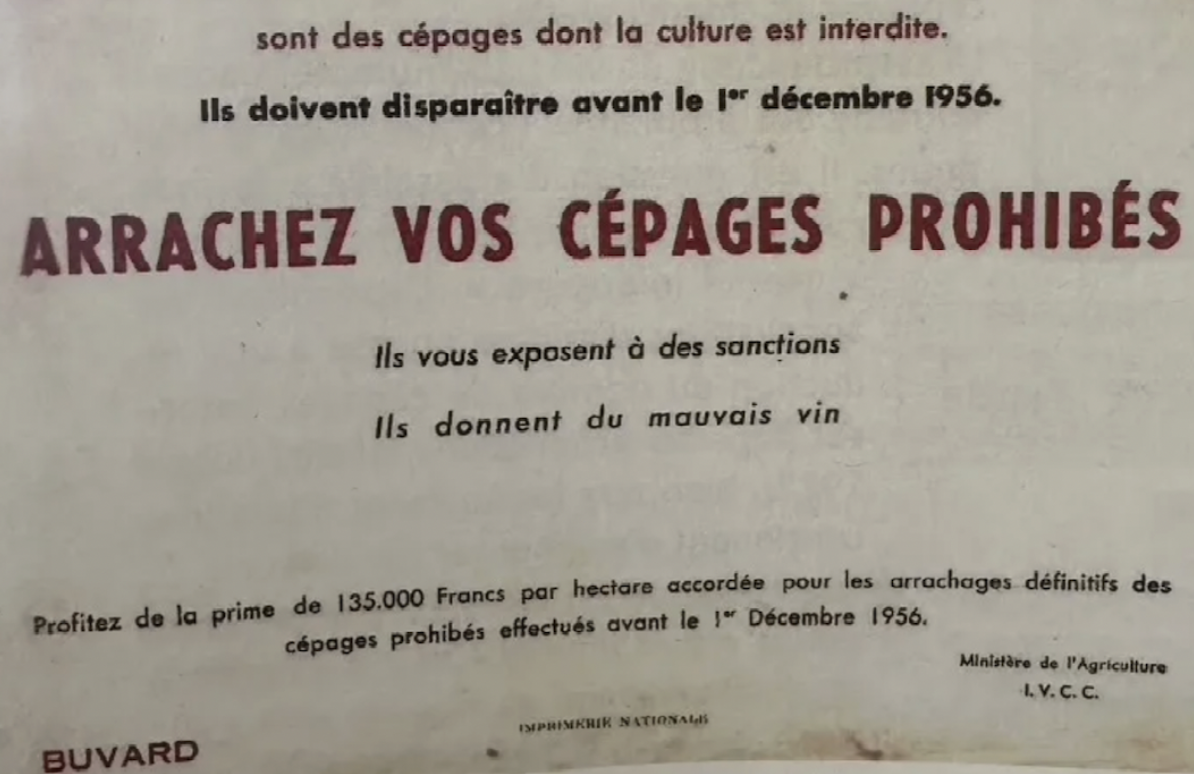
This is a screenshot from Alice Feiring's blog. Go and check it out.
"'Ils donner du mauvais vin" translate into: They give an awful wine. Here was the 1950s campaign to uproot what was viewed as the worst offenders
Writers
- Among the many (many) lists wrapping up the end of the year Vittles ran a good piece on the worst food (media) for 2025. A worthy read on the lay of the land, especially regarding influencers and their platforms, serving as “… a reminder that real influence is in the hands of a very small number of powerful tech companies, and that tectonic media shifts are due to algorithmic tweaks designed to make these platforms money, not a response to anything people actually want.”
- While I thought to spare you some, I’ll not spare you all the lists. You may like:
- Everyday Drinking’s top 11 articles from 2025.
- NYC’s Kitchen Arts & Letters top 10 cookbooks for the year.-
- Alicia Kennedy compiled six essays that define her newsletter. I often find it a bit too lofty, but then just when I think I’ll pull the plug, I find myself reeled back in.
- And so here’s Alicia Kennedy, being Alicia Kennedy, in the Yale Review.
‘How does food emerge from its post-Bourdain malaise? Not even Stanley Tucci searching for Italy could resuscitate the culture into a consensus about who the foodie is now and what they care about …
‘The problem isn’t just about the domination of food culture by internet aesthetics. Instead, it’s about the way food enthusiasts use those aesthetics to curate away complexity and discomfort, leaving food systems unchallenged and food culture shallow … what’s been lost in the process is the foodie’s potential power as both tastemaker and advocate.’
It’s a cracker.
- Among those breadcrumbs, I found my way to How we lost our taste for the vicious restaurant review – an article in The Observer. What started with some fun AA Gill fodder (“Inedible unless you are as drunk as everyone else in the room,”) ended in a look at our very own Broadsheet finding its feet in London. While I think they’re giving Australia’s traditional food media a good run for their money, particularly in the news department.
Owner Nick Shelton didn’t seem too fussed about keeping up with the big wigs. “I’m not asking [our writers] to tell me if the pasta was overcooked or unsalted,” he told [writer Simon Parkin]. “I want them to tell us whether the experience is worth a person’s time.”
It’s not a formula they’re too sure of in London: ‘“Londoners are allergic to anything too slick, humourless, or self-consciously cool,” he [a nameless, presumably competing, editor] said. “Especially something that already looks like an advert.” He also questioned whether an aspirational brand could feel authentic when its staff are “a handful of 30s-somethings in Walthamstow writing about a world that isn’t really theirs”. Readers can often sense when a writer is performing a higher-earning lifestyle rather than inhabiting it, he suggested. In London, where class signals are read with forensic acuity, there is a fine line between aspiration and cosplay.’ Ouch. (Feel free to insert your own cricket/whinging poms analogy here.)
Simon Parkin concludes: ‘We now live inside a media ecology in which everything looks faintly sponsored, where enthusiasm reads as authenticity, and where it is increasingly difficult to tell whether you’re reading an appraisal or an endorsement, whether a glowing write-up is independent judgement, paid collaboration, or something in between. That blurred proximity hints at a philosophical tension running not only through Broadsheet, but through this moment in media.’
Restaurants
- Aplus Insights ran a list of 10x10, looking at the Australian restaurants that have made it to a decade and their raisons d’etre. Among them: Aloft in Hobart, Continental Deli, Bennelong and Firedoor in Sydney. Osteria Oggi in Adelaide; Heartbreaker and Minamishima in Melbs, Paper Daisy at Halcyon House in Cabarita Beach, and Mary Street Bakery in West Leederville, Western Australia. Max Brearley.
- Helen Rosner compiled her list of the best things she ate in 2025 for the New Yorker – I’m so enjoying her writing. This week it was about the Jamaican patty. I’ve never eaten a Jamaican patty, but now I want to.
‘The Jamaican patty is, I propose, a culinary avatar of New York on par with the hot dog, the pizza slice, and the bagel, those other portable totems of immigrant ingenuity and the city’s knack for making the quick address of hunger into something like a civic religion. Today, in at least four of the five boroughs, you’re always within two blocks of a patty ready to be bitten into, whether it’s microwaved behind the counter at a bodega or a slice joint, or pulled from the steam cabinet at a dedicated patty shop: a flaky, golden half-moon filled with curried meat or fish or vegetables or whatever else can be coaxed into its turmeric-stained folds. As the knish descends from the metropolitan pantheon—ave atque vale to that Eastern European stalwart, its crust filled with onion-scented potato and the ghost of another century’s promises—the patty, a thrilling, dynamic distillation of South Asian, African, and Caribbean influences, should take its rightful place as the city’s most iconic pastry.’
Until next month,
Libby
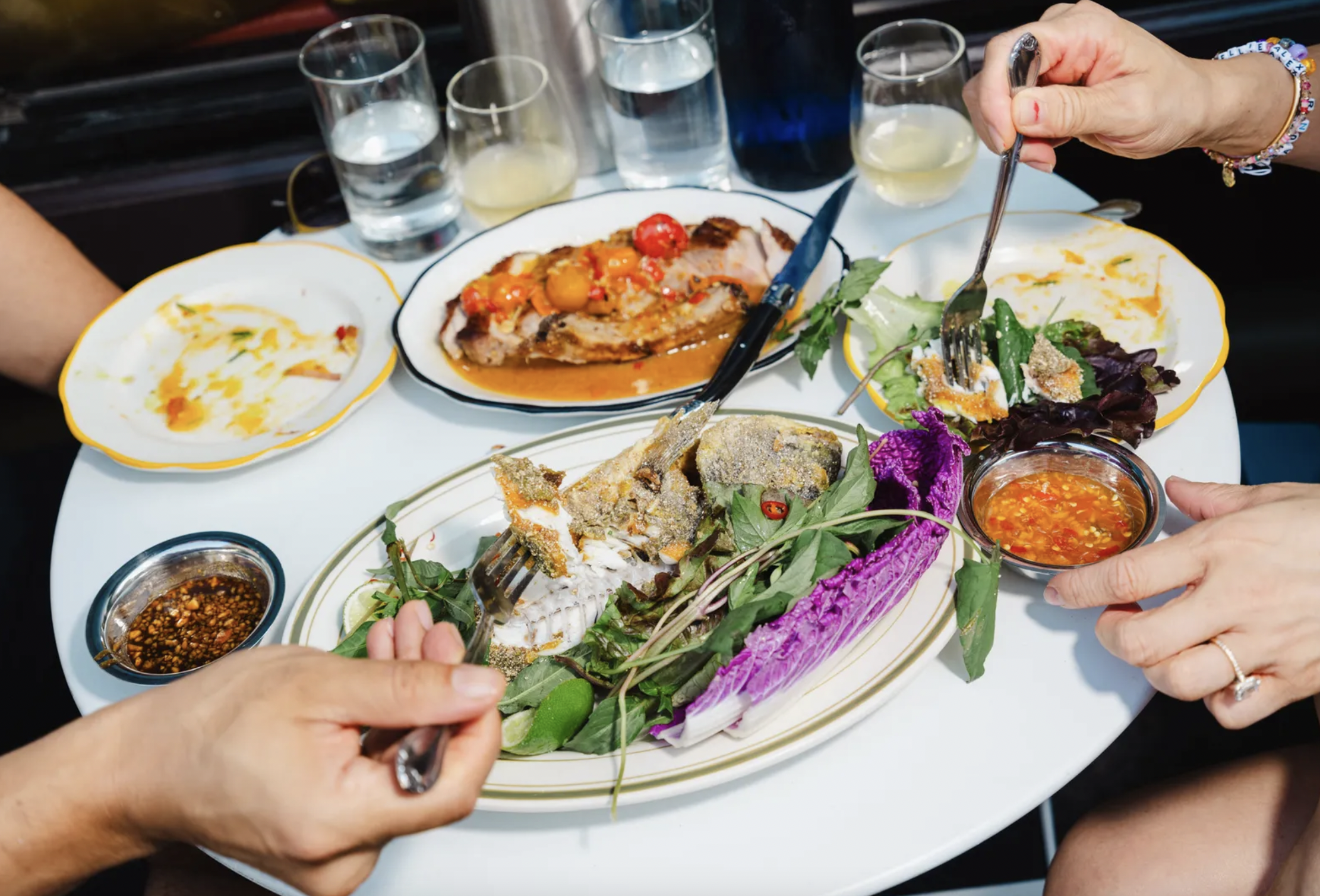
Photograph by Lanna Apisukh for The New Yorker